Recently, we hosted an online webinar, The Long Tail of Marketing (Without Burning Out), with the wonderful Alexa Bigwarfe, author, publisher, and book marketing expert. By the way, you can watch the full replay on our YouTube channel.
So… how do you actually avoid burnout when promoting your book? We’ve prepared the main takeaways from Alexa’s lecture below.
First, who is Alexa Bigwarfe?
Alexa is the founder and CEO of Write|Publish|Sell and the powerhouse behind the Women in Publishing Summit, a year-round community for authors, publishers, editors, designers, and industry professionals.
She runs multiple publishing companies, teaches authors how to launch and market their books, and even writes romantic comedies under the pen name Lexi Haddock.
Oh, and she also has three teenagers and an active community life. So yes, she really understands the realities of juggling life, writing, and book marketing.
Top insights from Alexa Bigwarfe’s webinar
Now, let’s go through the main insights Alexa shared. These tips can make your marketing feel lighter, more manageable, and even a little fun.
1. Marketing begins long before launch
Many authors put all their energy into launch day, assuming that’s when everything matters.
However, the pre-launch stage is one of the most important, and the months after launch are equally crucial.
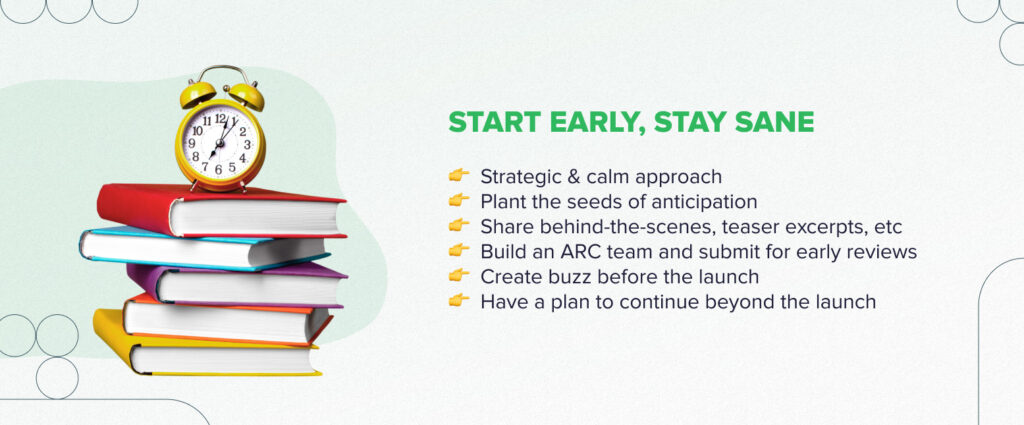
The pre-launch phase is the time to:
- Introduce yourself to future readers
- Show small behind-the-scenes moments
- Share early excerpts
- Collect editorial or trade reviews
- Recruit an ARC team
- Talk consistently about your book’s themes
This “early seed planting” prevents the common problem of a short-lived sales spike during launch, followed by a steep decline.
2. Burnout occurs when authors don’t have a plan
When authors try random tactics, copy others without context, or make decisions in a panic rather than with strategy, marketing becomes exhausting very quickly.
However, a thoughtful plan provides:
- Direction and clarity
- Predictable workload
- Control
- Fewer impulsive purchases of tools or courses
So, instead of suddenly deciding to run ads because someone mentioned they had success, authors can include ads in their long-term plan and learn from them gradually, saving time and money.
3. Consistency matters more than intensity
Results build gradually when authors show up consistently. We live in a world that expects immediate results, but book marketing works very differently.
Alexa shared that one author in her community didn’t have time for a big launch for her fourth book. She simply announced it and moved on. Yet this launch outperformed all her previous ones because she had steadily cultivated her readership over the years through newsletters, posts, and engagement.
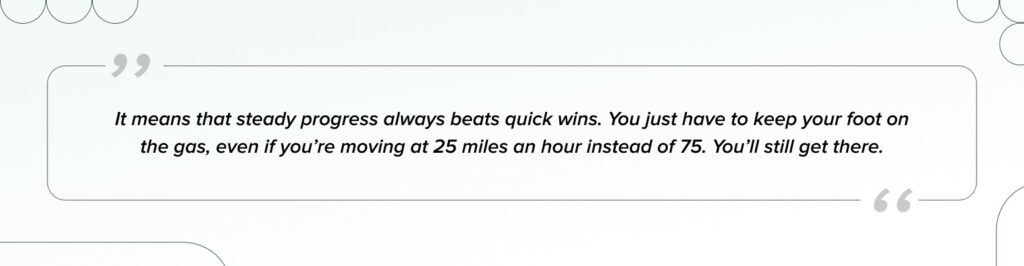
It means that steady progress always beats quick wins. You just have to keep your foot on the gas, even if you’re moving at 25 miles an hour instead of 75. You’ll still get there.
4. Authors shouldn’t try to do everything alone
A key part of preventing burnout is learning not to carry the entire marketing load alone.
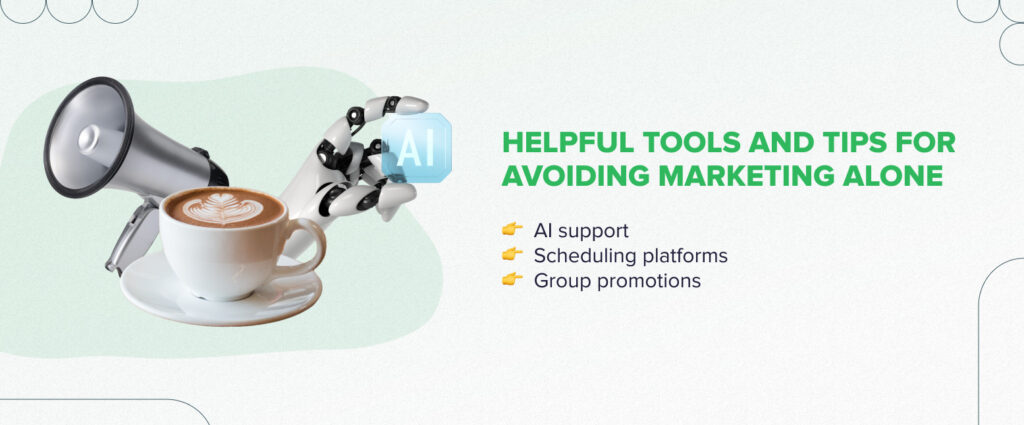
There are countless ways to simplify your workflow. So, here are some helpful tools and approaches.
AI support
Authors can use AI tools to draft copy, turn transcripts into content, create graphics, generate reels, or repurpose long videos into short clips. For example, you can convert a podcast interview into multiple short videos using modern AI editors.
Scheduling platforms
Tools like Vista Social, Later, SmarterQueue, and Hootsuite let authors create content once and automatically push it to all platforms.
Group promotions
Services such as BookFunnel and StoryOrigin make it easy to grow your email list alongside other authors in your genre.
Thus, delegation and automation free up mental space and significantly reduce exhaustion.
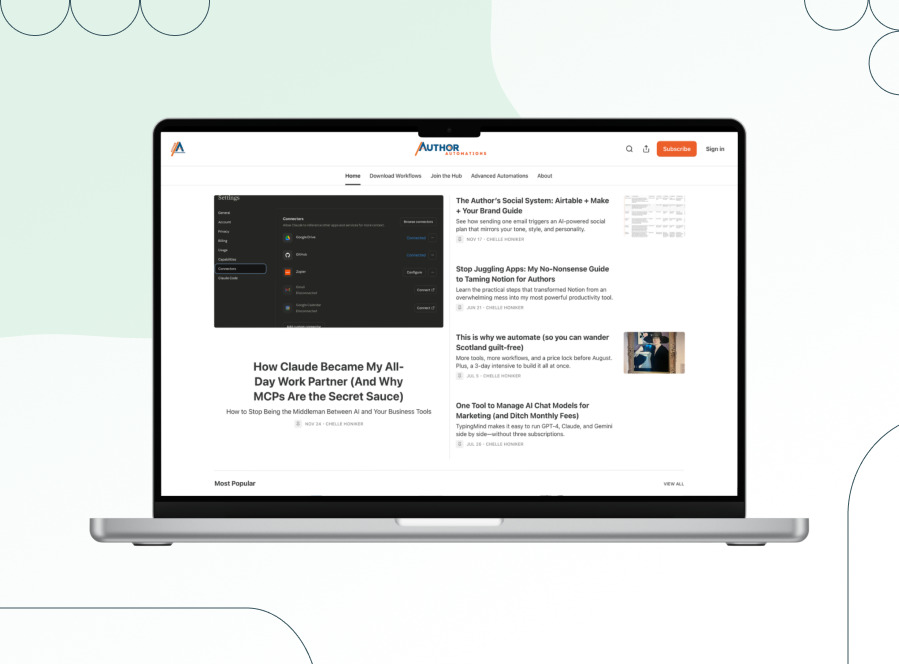
By the way, if you’re interested in making your workflow more efficient, Alexa points authors to Chelle Honiker’s Substack, Author Automation, where she shares advanced automations, step-by-step workflows, and practical tools you can download.
5. Content is king, but it shouldn’t drain your energy
Consistent content creation boosts visibility, but Alexa encouraged authors to approach it strategically rather than feeling pressured to constantly produce new content.
Batching
Working in batches helps authors avoid daily stress. For example, creating all the content for two weeks in just one session can significantly reduce the feeling of being “always behind.”
Repurposing
One piece of content can easily become many. A blog post can become a newsletter, then several social posts, then a short video tip. Most followers see only a small portion of your posts, meaning repetition is absolutely normal.
Evergreen content library
Authors can create a folder of “always relevant” materials (reviews, quotes, writing tips, behind-the-scenes moments) and schedule these posts to recycle automatically throughout the year.
6. Build fans, not just readers
The long-term marketing success comes from connection, not volume. A smaller but engaged audience is far more valuable than a large, but passive one.
For example, an author who regularly responds to comments, shares personal stories, or recommends other writers in their genre helps foster trust and community. These readers are more likely to buy new releases, leave reviews, and spread the word.
7. Make reader engagement the heart of your content
Authors need to understand who their readers are and what interests them.
For non-fiction authors, engagement can be especially straightforward here. Since many of them teach, guide, or share expertise, their content easily lends itself to interactive questions.
For example, if someone is writing a book about automation tools, they can ask:
- What tools are you using right now?
- What’s confusing about automation?
- What would you like to automate in your work?
- What’s your budget for tools like this?
For fiction authors, it’s worth leaning into behind-the-scenes storytelling. You can talk about your characters, worldbuilding, writing process, or the inspirations behind certain scenes.
Here are some ideas for inspiration:
- Telling the story of how a walk with the dog inspired a mischievous chipmunk character
- Sharing a moment when a child accidentally deleted a chapter
- Talking about a childhood love for vampires and how it shaped the book
7. Let data guide your decisions
Tracking results is one of the easiest ways to avoid burnout. When authors understand what works and what doesn’t, they become more confident and less overwhelmed.
Helpful metrics include:
- Which posts get engagement
- Which ads lead to actual sales
- What grows the email list fastest
- What types of content get shared
- How the audience size changes over time
For example, if a reel generates far more engagement than static posts, it makes sense to create more reels. If a certain paid promo doesn’t generate new subscribers, authors can stop investing in it.
8. Writing more books keeps your marketing alive
Alexa also emphasized that one of the most effective ways to keep your marketing going is simply to write more books. Every new release becomes a marketing tool on its own. It brings fresh attention to your backlist, introduces new readers to your work, and gives you another piece of content to talk about across all your platforms.
Each new book expands your presence, strengthens your author brand, and naturally keeps your momentum growing.

Wrapping up
Book marketing doesn’t have to feel overwhelming. Alexa’s insights show that when you build simple systems, stay consistent, and focus on a real connection with your readers, the whole process becomes much more manageable, even enjoyable.
And remember, we at Miblart are always here to support you, starting with a book cover that helps your story stand out from the very first glance.
Does book marketing ever feel exhausting? How do you deal with it? Share your thoughts in the comments below! Your experience might be exactly what another author needs to hear today.