Book reviews play a huge role in how readers discover and trust new titles. Yet for many authors, getting them can feel confusing, frustrating, or even risky. To help clear things up, we hosted an online webinar on how to get more reviews on Amazon and similar platforms with Dale L. Roberts.
By the way, if you missed our previous article based on another webinar with Alexa Bigwarfe, be sure to check it out. We shared practical tips on how not to burn out while marketing your book here.
So, how can authors encourage more reviews without violating platform rules or risking their existing reviews? Below, we’ve pulled together the key insights Dale shared during the session.
A few interesting facts about Dale L. Roberts
Dale L. Roberts is an indie author and the host of Self-Publishing with Dale, a YouTube channel dedicated to helping authors build sustainable self-publishing careers. He has been working full-time in self-publishing since 2014 and regularly shares practical insights based on real experience.
Dale covers everything from book publishing and marketing to video creation and networking, and he’s especially well known for helping authors navigate platforms like Amazon, including the dos and don’ts of getting book reviews the right way.
Insights on getting reviews from Dale L. Roberts
Now, let’s walk through the key insights Dale shared. These tips will help you approach reviews more confidently, avoid common mistakes, and build a long-term review strategy.
Why reviews matter more than authors think
Many authors see reviews as a nice bonus, but Dale L. Roberts made it clear that they play a much bigger role. Reviews serve as a trust signal for both readers and platforms like Amazon.
From Amazon’s perspective, reviews help determine whether a book looks legitimate and worth surfacing. From a reader’s point of view, they reduce hesitation. Even a few honest reviews can dramatically change how a book is perceived.

Why reviews can disappear
One of the most painful moments for authors is watching reviews vanish. According to Dale, this almost never happens randomly. In most cases, reviews are removed because they violate Amazon’s policies, often unintentionally.
Common causes include:
- Review swaps between authors
- Reviews from friends or family members
- Language that sounds promotional or biased
- Small “harmless” mistakes that trigger automated filters.
Amazon is extremely cautious about anything that looks coordinated or incentivized. Even when intentions are good, certain patterns raise red flags, and the system removes reviews without warning.
What Amazon actually allows
It’s essential to understand the difference between what feels reasonable and what Amazon actually permits.
Amazon allows:
- Both verified and unverified reviews
- ARC reviews (as long as there is no incentive)
- Honest opinions — positive, neutral, or negative.
What causes trouble is:
- Language that suggests obligation (“I promised,” “in exchange,” “as a favor”)
- Undisclosed free copies
- Anything that implies compensation.
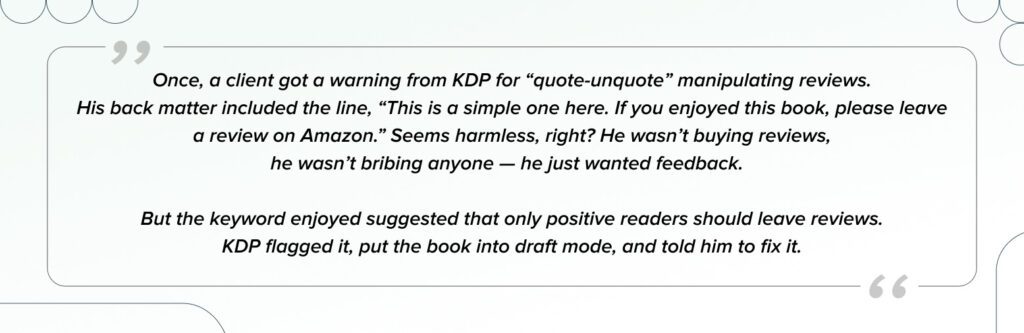
Dale emphasized that wording matters. The way a reader frames their review can be the difference between it staying up or being flagged.
The safest place to ask for reviews
Thus, one of the safest and most effective places to ask for reviews is inside the book itself, specifically in the back matter.
This works because:
- The reader has already finished the book
- The request feels natural, not intrusive
- Amazon sees it as organic reader behavior.
Timing matters here. Asking at the end of the book respects the reader’s experience. And the wording should stay neutral and pressure-free. Even asking for a simple star rating helps, as ratings contribute to visibility just like written reviews do.
Make reviewing easy
Another recurring idea in Dale’s session was reducing friction. Every extra step lowers the chance that a reader will leave a review.
Helpful practices include:
- Using direct review links
- Accounting for regional Amazon stores
- Using universal links (like Genius Link) that redirect readers automatically.
One fewer click might seem insignificant, but at scale, it makes a noticeable difference.
The easier you make it, the higher the chances are of getting that review.
Use Amazon’s built-in systems to your advantage
Amazon already nudges readers to leave reviews. Authors just need to work with those systems instead of against them.
These include:
- Kindle’s built-in review pop-ups
- Amazon’s automated follow-up emails
- Goodreads integration for readers who track books there.
Rather than forcing reviews externally, Dale encouraged authors to let Amazon handle part of the process naturally.
Using social media to thank readers
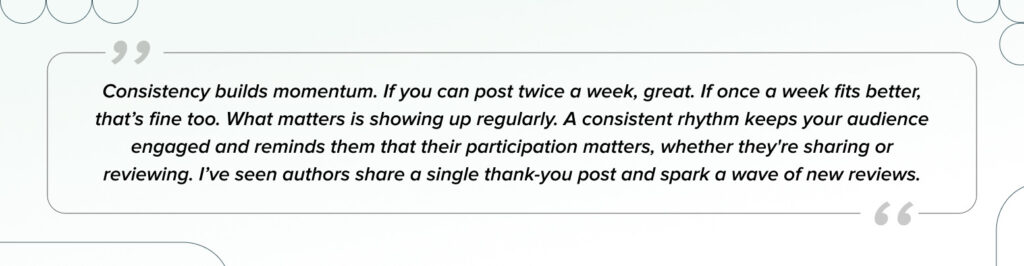
When it comes to social media, Dale advised shifting the focus from asking to appreciating. Instead of constantly prompting for reviews, authors can share them with gratitude.
Try these effective approaches:
- Thank-you posts
- Sharing screenshots of reviews
- Short reaction videos
- Casual acknowledgments of reader support.
Email automation that earns reviews over time
Email remains one of the most reliable long-term tools for earning reviews when used thoughtfully.
If social media is the public conversation, then email is the personal one. It’s where you can speak directly to your readers without fighting algorithms, trends, or timing.
Dale highlighted the importance of:
- Onboarding sequences for new subscribers
- Careful timing when asking for reviews
- C conversational, human tone.
Automation doesn’t mean robotic. When emails feel personal and respectful, readers are far more likely to respond positively.
ARC teams as a long-term review strategy
ARC teams were presented as one of the most reliable ways to gather early reviews. But here you should consider a few things:
- Building an ARC team
- Using platforms like StoryOrigin or BookFunnel
- Working with premium ARC services.
Clear expectations matter here. Not every ARC reader will review, and that’s normal. The goal is consistency and trust, not pressure.
Summing up
Getting more reviews isn’t about shortcuts or hacks. It’s about understanding the system, building trust with readers, and making the process easy and natural. When reviews are earned the right way, they support your book long after launch and strengthen your author presence over time.
If you’d like to dive deeper, you’ll find even more practical insights and real-life examples in the full webinar replay. You can watch the complete video version on our YouTube channel.
What secrets do you know for getting reviews on your books? Share your tips in the comments!